
HOW CHILDREN LEARN EMPATHY: BUILDING OFF OUR “HEART OF UNDERSTANDING” LEARNING
At The Heart of Understanding, 2025’s system-wide professional learning day, we came together as an early years community to learn. As one of the main topics of the day, we explored what empathy looks like in children and how we, as educators and caregivers, can nurture it. Empathy is a foundational skill that supports children’s relationships, well-being, and learning.
So let’s dive in and unpack what we learned about this topic.
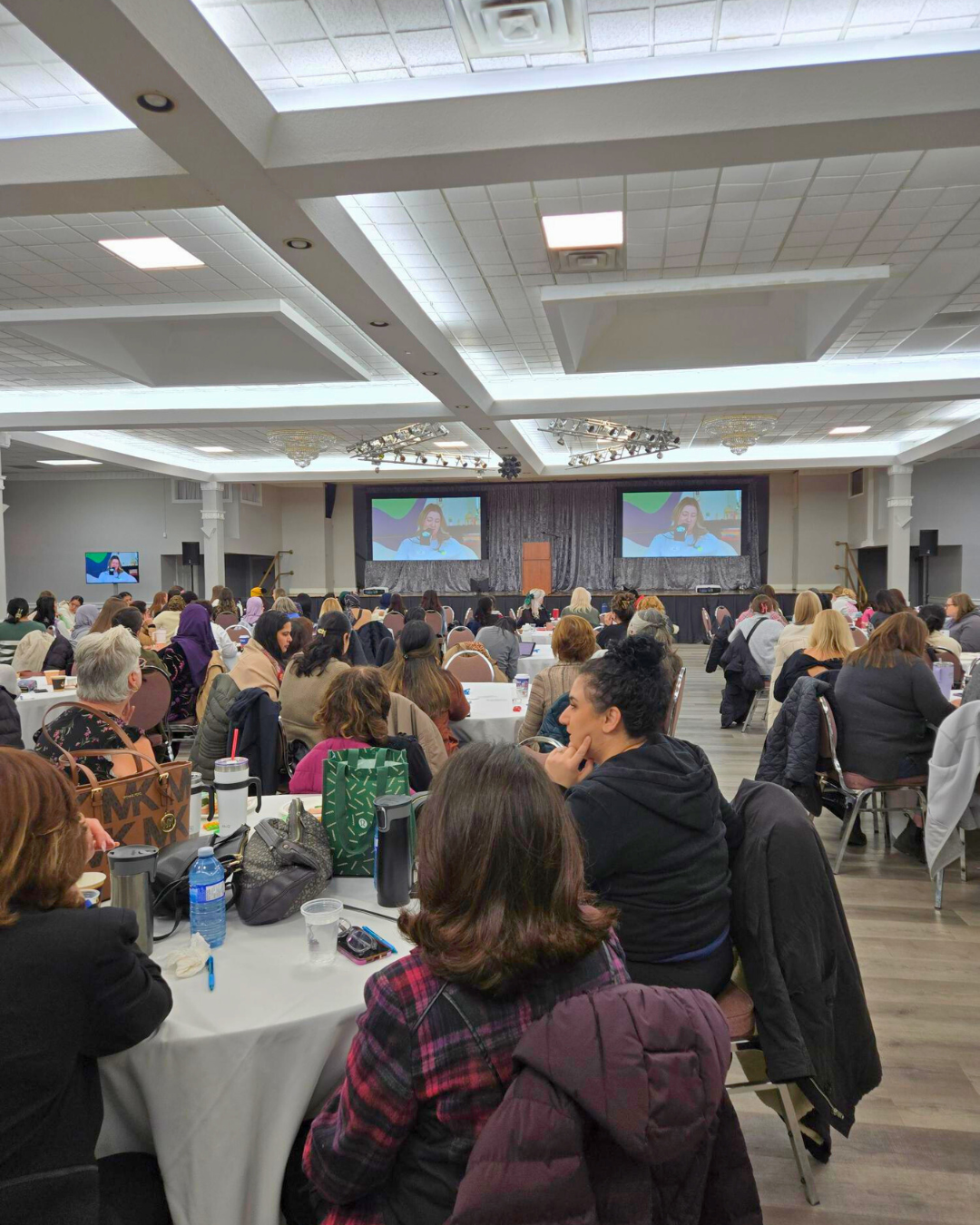
Learning together at a Virtual Viewing Space for the Heart of Understanding
What Does Empathy Look Like in Children?
Empathy in young children often shows up as:
Sharing concern or comfort for someone who is upset
Noticing changes in others’ expressions or tone
Small acts of kindness like offering a toy or a hug
Trying to help a friend feel better after a conflict
Because these capabilities grow with experience and practice, observing children’s empathetic behaviors is a powerful way to understand their social-emotional development.
Take a moment to reflect:
When was the last time you noticed a child showing empathy in your program?
What did you do in that moment?
How did your response either extend or quiet that empathetic gesture?
Sometimes, empathy is subtle. Slowing down to notice it helps us nurture it.
How Children Learn to Understand Emotions
Children learn empathy when they can label and understand both their own, and others emotions. When we help name feelings, for example, by saying something along the lines of “I can see you feel sad because the toy broke”, children connect emotional words to experiences. This builds emotional vocabulary and emotional awareness, which are essential building blocks for empathy.
Encouraging conversations about feelings helps children make sense of what they feel and how others might feel differently or similarly in the same situation. This supports not just empathy, but self-regulation and social-emotional development (Westbrook, 2021).
Consider:
How often do we intentionally name emotions throughout the day, not just during conflict?
Do children hear us naming our own feelings in healthy ways?
Are we creating space for children to disagree about how someone might feel?
Empathy grows when emotional language becomes part of the everyday rhythm of the classroom.
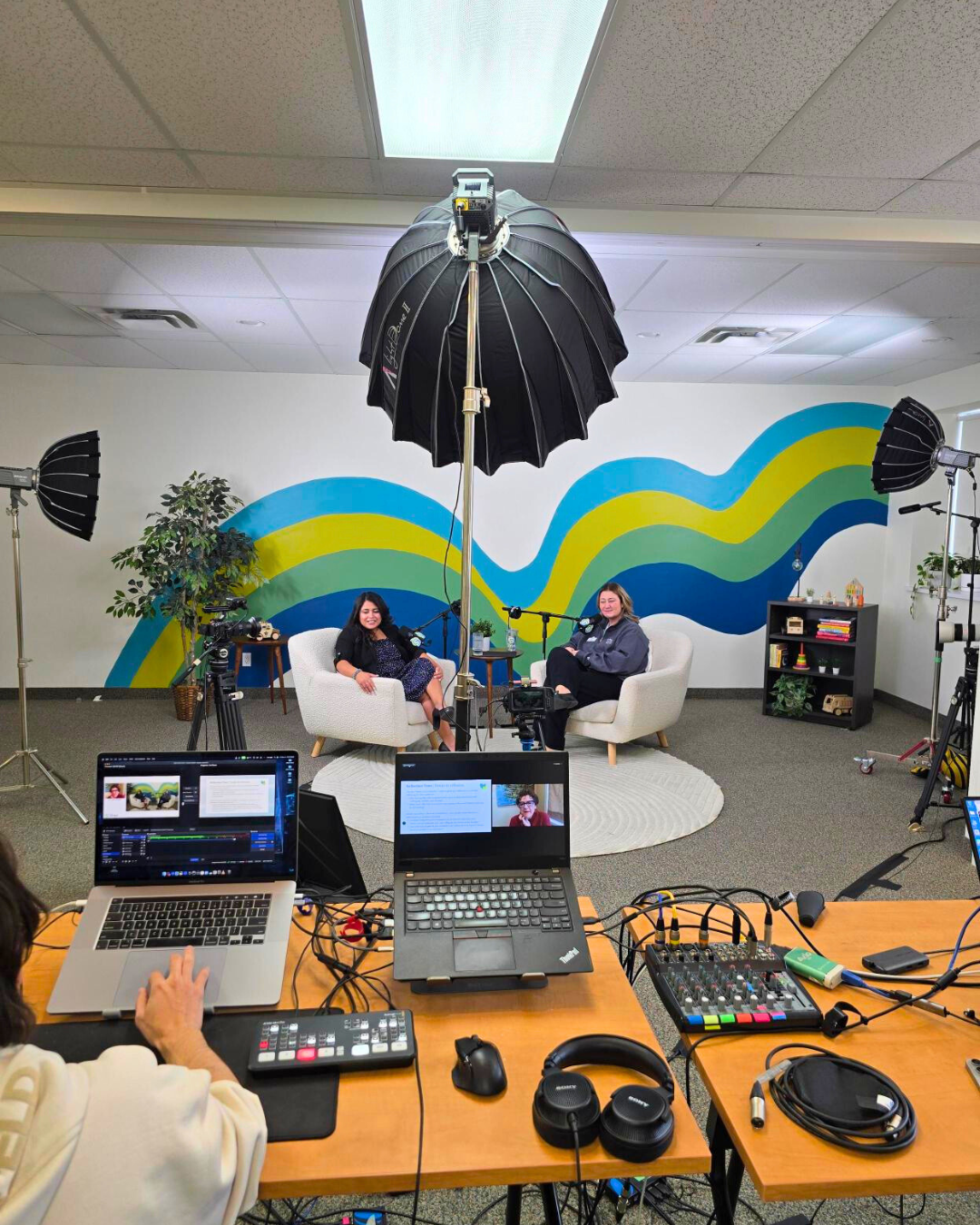
Behind-the-scenes of Dr. Jean Clinton’s Heart-to-Heart with Ally Scott and Ana Valle Rivera
Empathy Begins With Us: The Adult’s Role in Children’s Learning
Children learn empathy through relationships, and those relationships are shaped by us, who care for and guide them. As explored throughout The Heart of Understanding, empathy is not something we teach children in isolation. It is something we model, embody, and co-regulate alongside them.
In her afternoon breakout, Sara Westbrook reminded us that understanding ourselves, our emotions, triggers, and regulation strategies, is essential to showing up as our best selves. When educators build emotional awareness, emotional management, and emotional resilience, they create environments where children feel safe to express emotions. Children learn how to respond to others by first experiencing how we respond to them.
This theme continued across The Heart of Understanding in sessions that invited educators to slow down and look beneath “behaviour”. Dr. Jean Clinton’s Heart-to-Heart conversation further highlighted how empathy and connection are not “soft skills,” but essential foundations for healthy brain development (Clinton, 2020).
Ultimately, fostering empathy in children begins with us as educators who are willing to reflect, regulate, and lead with heart. When we understand our own emotional experiences and honour children’s voices, cultures, and ways of being, we create learning environments rooted in belonging, where empathy can truly grow.
To learn more or revisit our learnings, check out the Heart of Understanding session recordings on Strive Online. Don’t know the password? Ask your leader or email info@striveswo.ca.
References
Clinton, J. M. (2020). Love builds brains. Tall Pine Press
Westbrook, S. (2021, March 18). What kids are telling me. UPower Presentations. https://upowerpresentations.com/what-kids-are-telling-me/
Share your thoughts on this topic in the comments below to keep the conversation going!