
Nurturing the Nurturers: Mental Wellness in our Daily Practice and Burnout Prevention
Nyiel Nhial RECE, Strive Community Animator
The Heart Behind the Work
Early childhood educators are the heartbeat of our communities. Every day, they guide young minds through their first discoveries, fostering curiosity, kindness, and confidence. But behind those bright smiles, many educators are running on empty. Long hours, emotional labour, and increasing demands can quietly chip away at wellbeing.
Studies show that burnout rates in early childhood education are among the highest in the education sector (Whitebook et al., 2018; Cumming & Wong, 2019). Yet mental wellness often remains an afterthought, overshadowed by program planning, licensing requirements, and the daily chaos of the classroom.
It’s time to change that and start recognizing the importance of prioritizing self-wellness in our care for others.
Understanding Burnout ECE
Burnout is a state of emotional, physical, and mental exhaustion caused by prolonged stress. It goes so much deeper than just “feeling tired”. In the our profession, this can show up as:
Chronic fatigue or trouble sleeping
Increased irritability or emotional sensitivity
Reduced sense of accomplishment
Withdrawal from colleagues or children
Loss of passion for intentional and impactful work
These challenges don’t come from one place. They stem from high child-to-educator ratios, inadequate program planning time, growing administrative demans, low wages, limited support, and the emotional strain of caring for children day in and day out.

What are YOUR stressors?
Recognizing your personal stressors is the first step toward change.
Building a Culture of Wellness
A culture of mental wellness starts at both the indiviual and organizational level. Creating environments that support psychological safety and wellbeing can significantly reduce burnout and turnover (Kwon et al., 2020; Jennings, 2015).
This typically looks like:
Prioritize Emotional Check-Ins
Start team meetings with a quick “wellness round.” Give educators a safe space to share how they’re feeling. Sometimes, being heard is the best form of relief.
Set Boundaries and Honor Them
Encourage educators to leave work at work. Leadership can model this by respecting personal time and avoiding after-hours communication unless urgent.
Normalize Professional Support
Therapy, coaching, and peer-support networks shouldn’t carry stigma. Partnering with local mental health providers or Employee Assistance Programs can make support more accessible. (Achieve Centre for Leadership & Workplace Performance, n.d.).
Promote Mindful Moments
Short breathing breaks, gratitude journaling, or mindful classroom practices can reset energy levels during the day. Even two minutes can make a difference.
Invest in Professional Growth
Feeling valued and competent enhances wellbeing. Offer training that aligns with educators’ passions, not just compliance requirements. (Lippard et al., 2023).
Self-Care That’s Realistic (and Actually Works)
Self-care isn’t just bubble baths and tea. For educators, it might mean:
Saying “no” without guilt
Taking a true lunch break
Scheduling regular movement or walks
Connecting with colleagues for mutual encouragement
Celebrating small wins both in the classroom and in your personal life. Every “aha!” moment counts
“You MUST take the initiative to take care of yourself because self-care is a necessity, not a luxury.”
Practicing boundaries, self-compassion, and peer support builds resilience and emotional balance for educators (Lippard et al., 2023).
What Leaders Can Do
Executive directors and administrators play a key role in preventing burnout. Consider:
Creating mental wellness policies: include flexible scheduling, wellness days, and clear pathways for support
Recognizing and rewarding effort because small gestures of appreciation go a long way
Encouraging open dialogue about stress and mental health. The more we talk about it, the less isolating it becomes
“A leader who has a strong understanding of emotional wellness translates to strength in the workplace, both for themselves and their teams.”
- Trainer, ACHIEVE Centre for Leadership
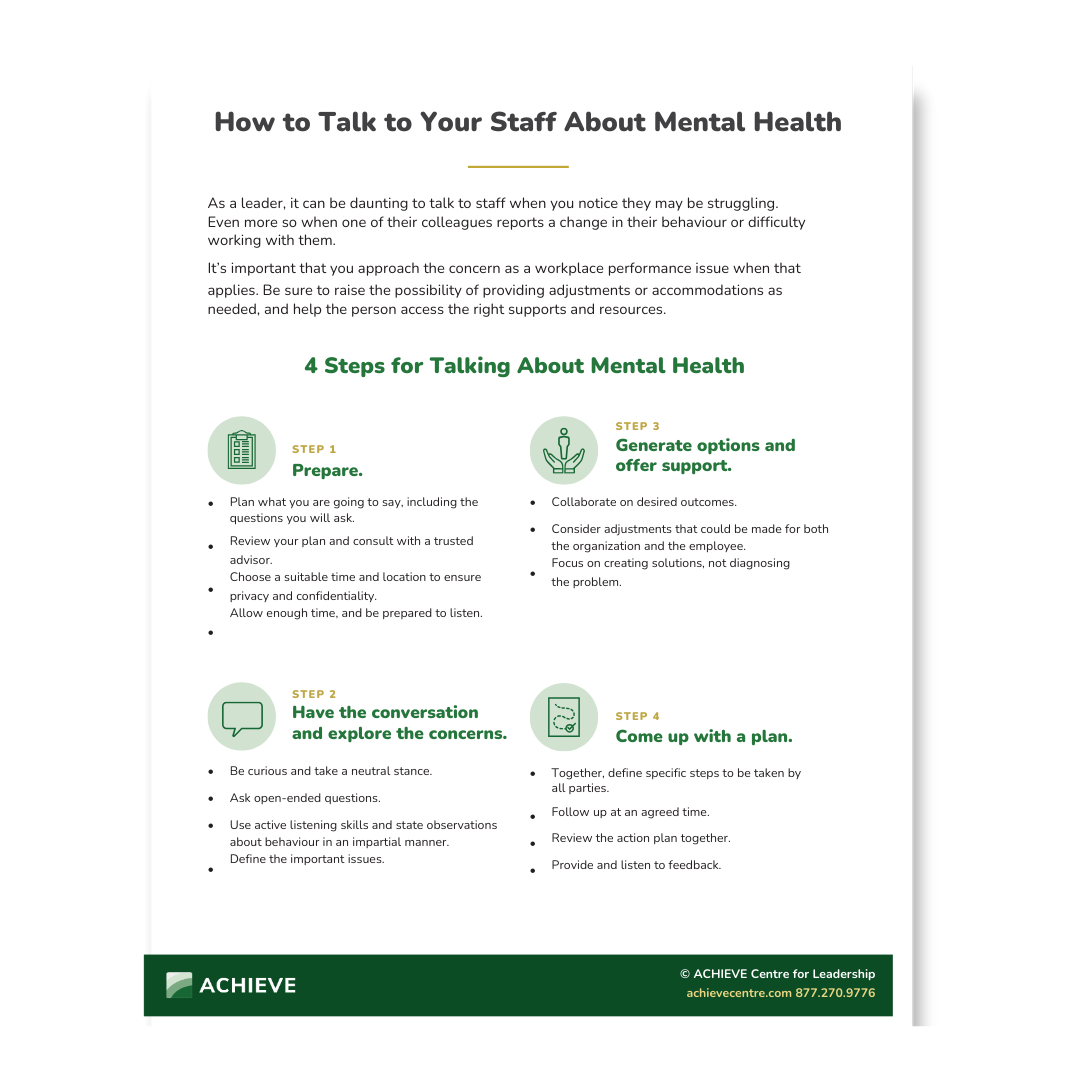
When leaders champion staff wellbeing, educators feel more supported, and they’re more likely to stay.
A Call to Care, for Ourselves and Each other!
When educators are well supported, children flourish. Creating a mentally healthy workplace benefits staff and directly strengthens the quality of care and learning that every child receives.
Let’s make mental wellness part of our curriculum for the adults as much as for the children.
“Caring for children begins with caring for those who care for them.”
References
Achieve Centre for Leadership & Workplace Performance. (n.d.). Mental health awareness and support. Retrieved from https://achievecentre.com/topic/mental-health-awareness-and-support/
Crisis & Trauma Resource Institute. (n.d.). Wellness strategies. Retrieved from https://www.ctrinstitute.com/
Jennings, P. A. (2015). Early childhood teachers’ well-being, mindfulness, and self-compassion in relation to classroom quality and attitudes towards children.
Kwon, K., Ford, T. G., & Salvatore, A. L. (2020). The impact of workplace climate on early educators’ stress: Organizational and leadership considerations. Early Education and Development
Lippard, C. N., Kwon, K., & Cho, E. (2023). Self-care and resilience among early childhood educators: Strategies for wellbeing. Early Child Development and Care.
Whitebook, M., McLean, C., Austin, L. J. E., & Edwards, B. (2018). Early childhood workforce index 2018. Center for the Study of Child Care Employment, University of California, Berkeley.