
Growing Together: A Student’s Perspective on Mentorship During Placement
Student placements are more than a program requirement. They are often the beginning of a lifelong journey in Early Childhood Education.
While every placement offers opportunities to learn, the mentoring relationships built along the way often leave the greatest impact. Thoughtful mentors create spaces where students feel welcomed, encouraged, challenged, and supported as they bridge the gap between theory and practice.
In this blog, Mitchell Gosse shares his experience as a student on placement, reflecting on his thoughts and feelings and the lasting impact of meaningful mentorship.
When I graduated from Humber College (Humber Polytechnic) in 2020, I did not think that I would ever go back to school as a student. Yet, in one month, I will be entering my third year of the Honours Bachelor of Early Childhood Leadership program at Fanshawe. My only regret is that I didn't return sooner.
For 5 years, I worked as an Educational Assistant (EA) in the Thames Valley District School Board, supporting children who reminded me so much of my brother¹. I saw the same boundless potential in them that I always saw in him. Despite my love for what I was doing, I felt a persistent yearning for something deeper, to create more of an impact beyond what my current qualifications allowed.
Stepping into university wasn't easy; I’ve had to face down insecurities and Imposter Syndrome² and continue to fight my own demons. But with gentle encouragement from my family, friends, colleagues, and fellow professionals, I made the leap.
My first placement, however, was a profound wake-up call. The academic and professional landscape had evolved, and so had I. Walking into an infant room for the first time was absolutely terrifying. While I had worked with vulnerable populations before, this was a new and completely foreign cohort that I had never been in charge of. Imposter Syndrome hit me with full force; I felt vulnerable, exposed, and terrified that I would fail at the first sign of trouble.
Initially, I did what many of us do when overwhelmed: I shut down. In the language of Dr. Marc Brackett's work on emotional intelligence³, I was struggling to accurately recognize, understand, and express the intense anxiety that I was experiencing. Even though I was paired with an incredibly caring Registered Early Childhood Educator (RECE), I felt isolated in my own fear.
Everything shifted during my midterm evaluation. My faculty advisor reminded me of a fundamental truth in the early childhood context: no one wants to see you fail. This field is built on a collective foundation of open communication, collaboration, and shared wonderings.
That conversation was the catalyst I needed to practice real emotional literacy. I finally opened up to my mentor, not just about the daily tasks, but about how I was truly feeling about the work. To my relief, my mentor met my vulnerability with empathy. We talked openly about our shared insecurities, identified our growth areas, and brainstormed how to navigate them together.
In attachment theory, Dr John Bowlby⁴ and, more recently, my own Professor Dr Tina Bonnett⁵ emphasize the critical importance of a “Safe-Haven”: a person of emotional safety to whom one can return to when overwhelmed or distressed. In that placement, my mentor became that safe haven for me. By creating a psychologically safe space, she allowed me to regulate my fears, regain my footing, and embrace the collaborative heart of ECE.
Over the following summer, my confidence grew through my work and team at London Children's Connection. By the time I returned for my second placement, a kindergarten classroom, I was eager to dive back in. This time around, my mentor had a deep understanding of provocations, child-led play, and intentional environment design that inspired me and the children daily. She immediately saw me for who I was, asked about my strengths, and encouraged me to bring my unique passion into the space, including bringing my guitar to share music with the children.
Leaving at the end of that term was hard, but my journey required me elsewhere. After finishing the term, I had the opportunity to return to the infant room, this time to work directly alongside my mentor as a colleague for two months. With my newfound confidence and overwhelming support, I saw myself no longer as just a student but as a co-educator.
My mentors served as a true secure base and provided me with the foundation and confidence to take risks, explore, and to find my professional identity.
All of these experiences have led me to where I am now: returning to a leadership role with London Children's Connection. Stepping back into a leadership space, I now carry a deep, lived appreciation for what it means to foster emotional intelligence and relational security. Not only for the children in our care but for the educators, staff, and friends that we work alongside.
Reflecting on my own journey, I'm profoundly grateful for both of my mentors who met me exactly where I was and gently empowered me to have confidence in my abilities.
To my classmates, fellow students, and future educators: we are all here for a reason. Don't be afraid to be vulnerable, to express what you're feeling, and to lean into the support of those around you. When we allow ourselves to learn from one another, we don't just become better educators: we build the responsive, supportive communities that our children and families deserve.
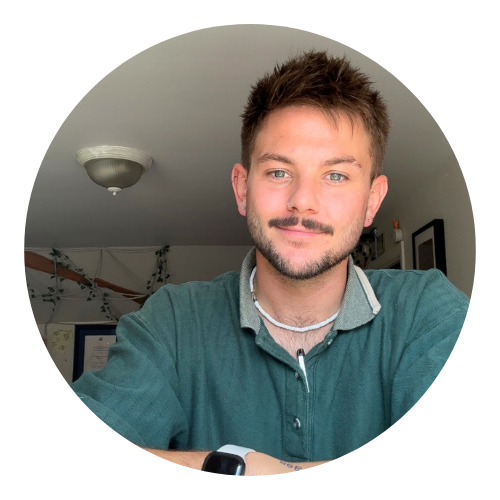
Written by: Mitchell Gosse
Formerly an Education Assistant, for the last two years Mitchell Gosse has been pursuing a journey built on play, emotional literacy, and continuous, life-long learning.
Since stepping back into the university scene to pursue an Honours Bachelor in Early Childhood Leadership, Mitchell has rediscovered his love for play, even having the opportunity to speak at Strive’s Winter Rethink 2026.
As Mitchell continues his journey, he would like to thank his family, friends, and his brother Brandon for giving him the confidence to find himself.
Stay Connected with Mitchell
mitchellgosse@hotmail.com
@mitchezl on Instagram
References
Mitchell Gosse, "Making Dreams Possible: Mitchell’s Story," Humber Advancement & Alumni, Humber Polytechnic, 2020.
Psychology Today, "Imposter Syndrome," Psychology Today Canada, reviewed February 27, 2026
Marc Brackett, Permission to Feel: Unlocking the Power of Emotions to Help Our Kids, Ourselves, and Our Society Thrive (New York: Celadon Books, 2019).
Bowlby, J. (1988). A secure base: Parent-child attachment and healthy human development. Basic Books.
Tina Bonnett and Donna France, "Attachment in the Context of Early Years Pedagogical Practice: Early Childhood Educator and Director Insights," Social Education Research 5, no. 2 (2024): 244–57, https://doi.org/10.37256/ser.5220244288.