
Navigating Difficult Conversations with Families: Turning Challenges into Opportunities
We’ve all been there before, faced with a situation where we have to have a conversation with a family about a concern, a sensitive topic, or even a boundary. These conversations can feel uncomfortable and awkward due to the fear of potentially damaging a relationship. However, when they are approached with care and intention, difficult conversations can instead strengthen and even deepen relationships with families.
Why are these conversations difficult?
Difficult conversations can be challenging for many different reasons. They may involve topics such as developmental concerns, health and safety issues, family conflicts, or setting professional boundaries. While it is valid to be worried about saying the wrong thing or being fearful of the family's reaction, oftentimes, the impact of avoiding these difficult conversations can be more harmful. Although as an educator you may be the one initiating the conversation, it is always important to keep in mind that families will enter this conversation with you with their own perspective, high emotions, cultural views, and even past experiences that will shape how they listen to you and receive this information from you.
Rather than avoiding these conversations, it is important to keep in mind that engaging in a respectful, honest, and open dialogue about the topic of concern is part of your duties as an educator, the same way that creating engaging environments for the children in your care is.
Preparing for the Difficult Conversation
Being prepared before entering a difficult conversation can help ease anxiety and reduce the risk of misunderstandings or miscommunication. Having a strong relationship already established with a family before starting the difficult conversation is a key component to ensuring positive outcomes. As stated in Ontario’s Pedagogy for Early Learning document, How Does Learning Happen?: “ Fostering good relationships with children and their families is the single most important priority for educators in early years programs.” (Ontario Ministry of Education, 2014, p. 24). If a strong relationship is not present, take the time to reflect on how you can strengthen your relationship with this family. What have you learned from this family? How do you routinely involve all families in your program? (College of Early Childhood Educators, 2017, p. 5)
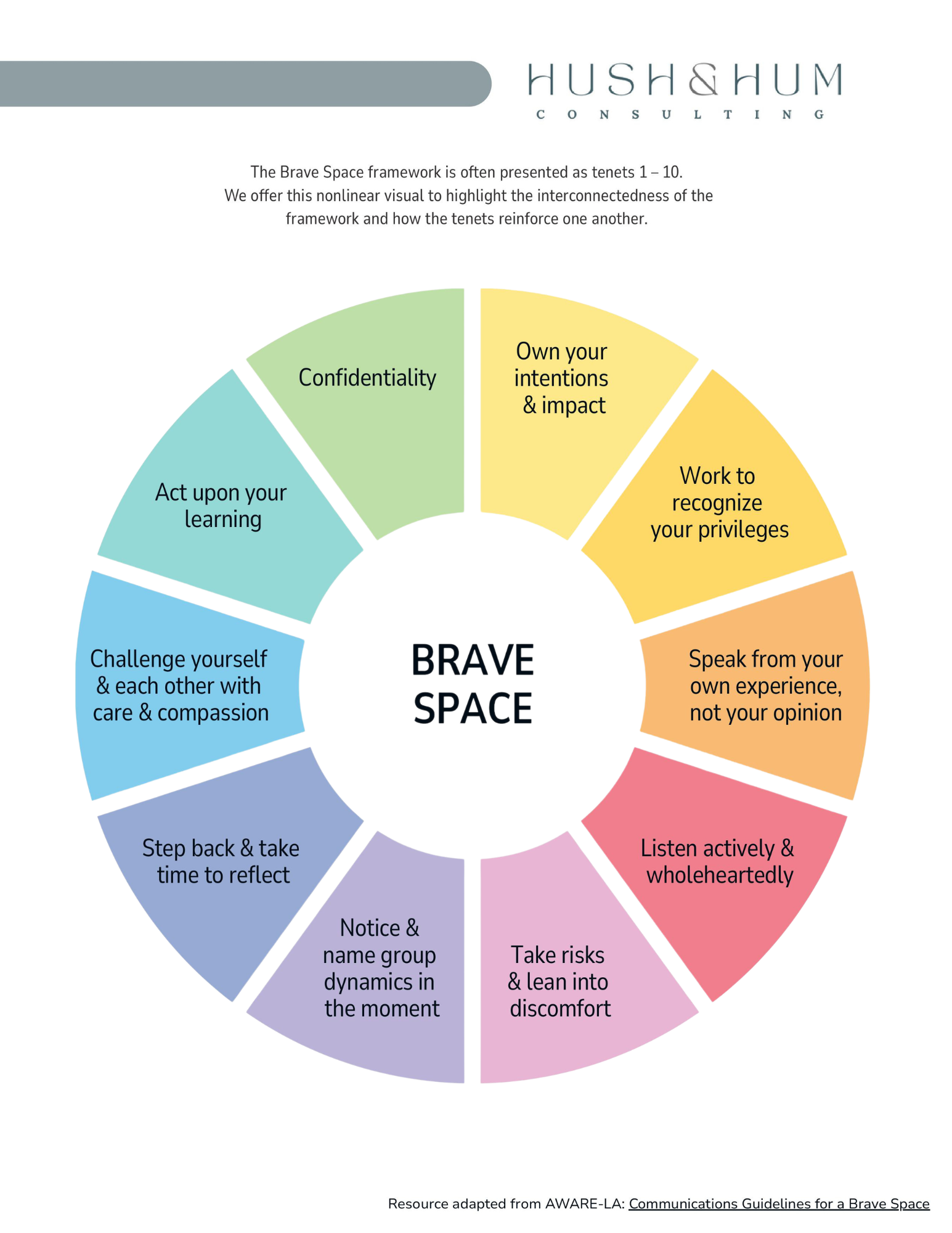
Another important practice is to avoid entering the conversation with assumptions. Our brains naturally seek answers and explanations, which can lead us to make assumptions about others' intentions, thoughts, or feelings. However, when we intentionally choose curiosity over assumption, we create space for greater empathy and understanding. If intentions or feelings are unclear to you, take the time to ask the family with genuine care and with the intention of providing support to that family. Take this time to also clearly make your intentions known to the family. Communicate your intention to support, and if you do not have the answers right away, communicating that you will be taking the time to find the answers for the family can help them feel reassured that you are working with them.
Reflecting on one of Hush & Hum’s Brave Space Tenets, "Listen actively and wholeheartedly," can help shift our mindset from listening to respond to listening to understand. When we take the time to truly listen with compassion, we lay the foundation for mutual respect, deeper connection, and collaborative problem-solving. (Hush & Hum, 2021).
Choosing the right time and place can also help set your conversation up for a positive outcome. Ask if the family has time to engage in a conversation to ensure they are not rushing to head to work or other commitments. Find a quiet space away from other adults or even ask your supervisor or director to step in so you can give the family your undivided attention without compromising supervision of the children in your care. Being mindful of tone, body language, and facial expressions can also help to steer your conversation into a meaningful dialogue.
You’re having the conversation, now what?
Once the conversation begins, continue to approach it with curiosity and compassion. Using “I” statements can help communicate your experience without placing blame or speaking on behalf of others. It is also important to remember that families may have a range of reactions to difficult information. Allowing space for their emotions and perspectives, even when they differ from your own, can help maintain trust and respect. Following the conversation, take the time to document what was discussed and identify any next steps that were agreed upon. When appropriate, creating an action plan with the family can help ensure that educators and families have a shared understanding of how they can work collaboratively to navigate the topic being discussed.
Difficult conversations are often not easy. When we approach these moments with compassion, curiosity, and respect, we create opportunities to strengthen the relationships we have with children and their families and strengthen the support we provide them.
References
Ontario Ministry of Education. (2014). How does learning happen? Ontario’s pedagogy for the early years. Queen’s Printer for Ontario. https://www.ontario.ca/document/how-does-learning-happen-ontarios-pedagogy-early-years
College of Early Childhood Educators. (2017). Practice guideline: Supporting Positive Interactions with Children (June. 2017) [PDF]Practice_Guideline_Supporting_Positive_Interactions_with_Children-4.pdf
Hush & Hum. (2021). Practice guideline: Brave space tenets. https://www.hushandhum.com/resources/brave-space-tenets.pdf
Share your thoughts on this topic in the comments below to keep the conversation going!